Details
The image
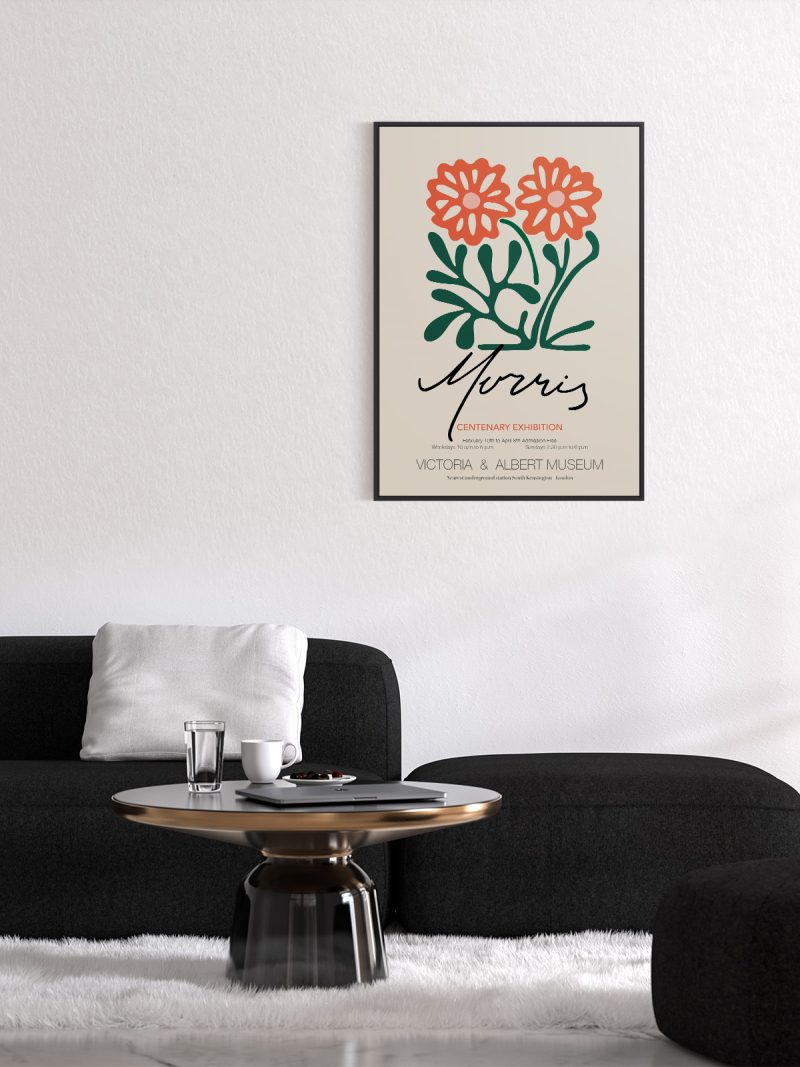
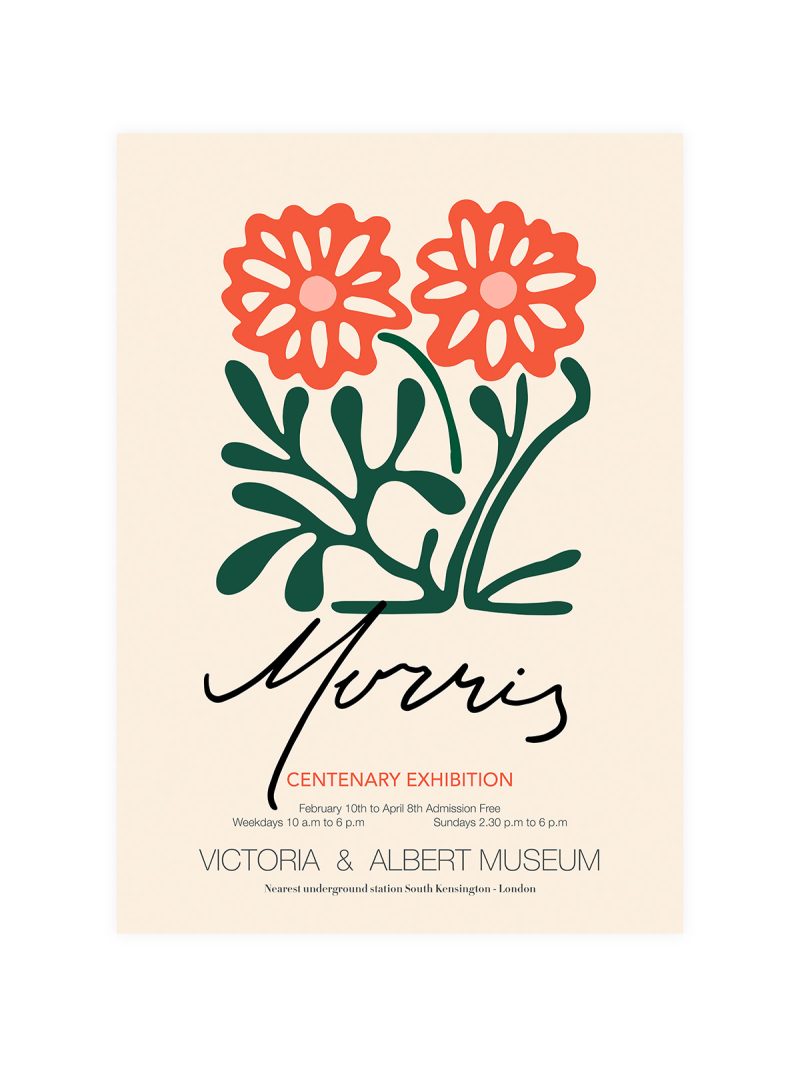
Sinuous stems carrying fritillary heads, drawn so that the flowers sit at different heights and the pattern moves in a slow rhythm across the sheet. The line is even, the colour is flat and the background is treated as part of the design rather than as empty space.
Where it comes from
Snakeshead was designed by William Morris in 1876, at a point when his workshop was arguing that British decoration had been ruined by industry and could be recovered by returning to hand processes and to observation of plants. The pattern takes its name from the fritillary, whose nodding head and spotted petals suggested the shape and it is drawn from life rather than from a pattern book, which is why the stems curve as they do.
On the wall
It suits a hallway, a reading corner or a bedroom, where a dense pattern gives a wall texture without adding objects. Because the design repeats in both directions, it works on long walls and in narrow spaces. In a group it should be the piece that provides density.
In company
The William Morris collection is where the same argument is made again and again.Avoid hanging it beside a second repeating pattern of similar weight, the eye stops distinguishing them.