
Hilma Af Klint
Hilma af Klint posters: the Tree of Knowledge series, soft colour and diagrams that read like notes. Browse the set and compare.
Showing all 5 resultsSorted by latest


Hilma af Klint: abstraction before it had a name
Af Klint trained as a painter in Stockholm and earned her living with landscapes and drawings, while making something else entirely in private. She belonged to a group of women who held séances and produced automatic drawings, and out of that practice came large, diagrammatic paintings: circles, spirals and botanical forms arranged like a chart.
She described the work as given to her rather than invented, and asked that it stay out of sight for a long time after her death. It did, and the abstract paintings reached a wide audience only decades later — which is why they read as a discovery rather than a period.
The Tree of Knowledge, one motif in several states
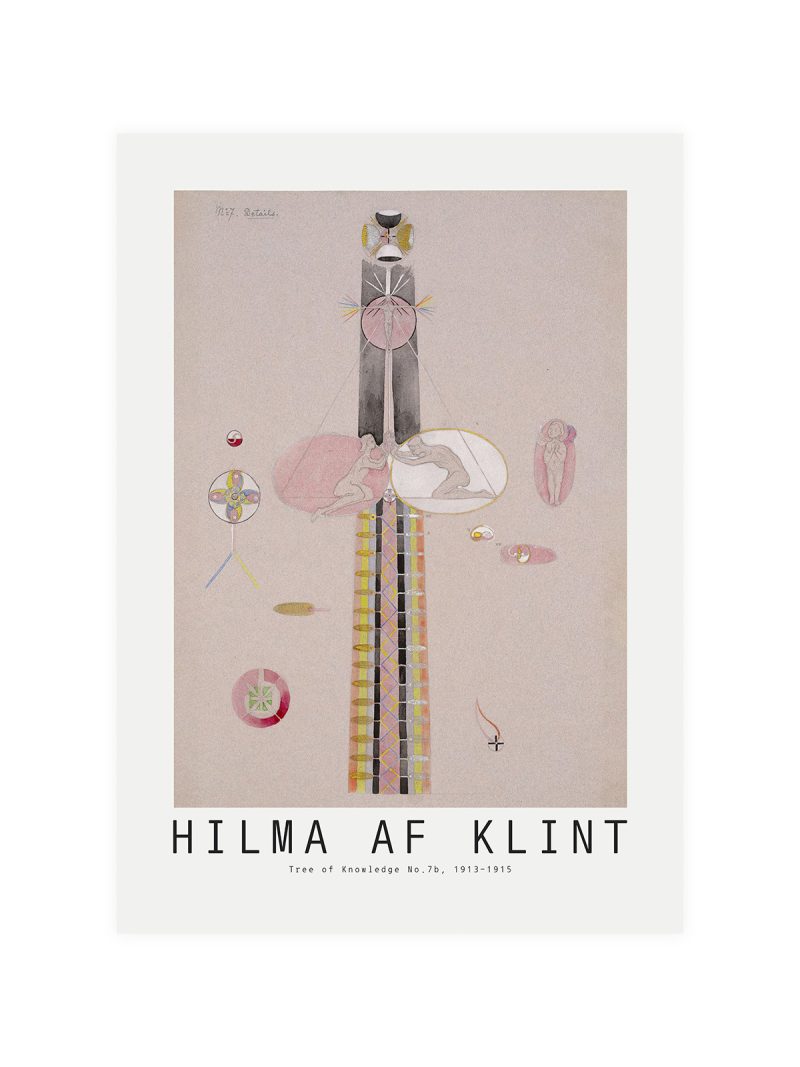
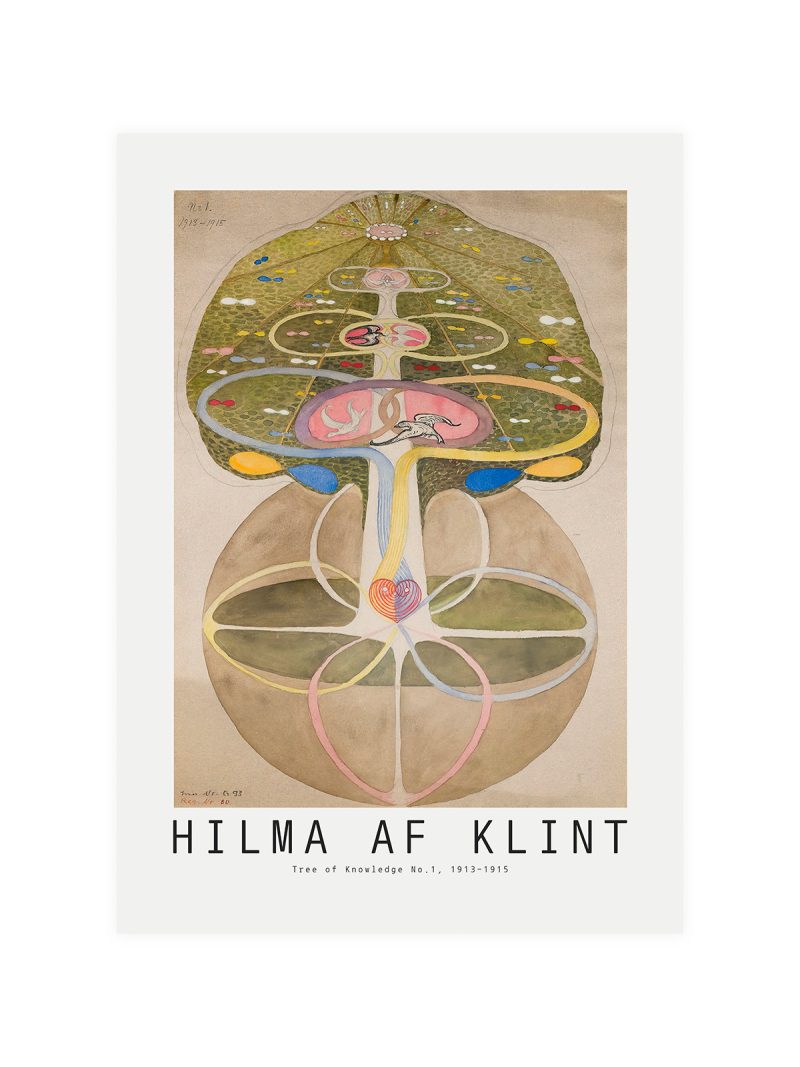
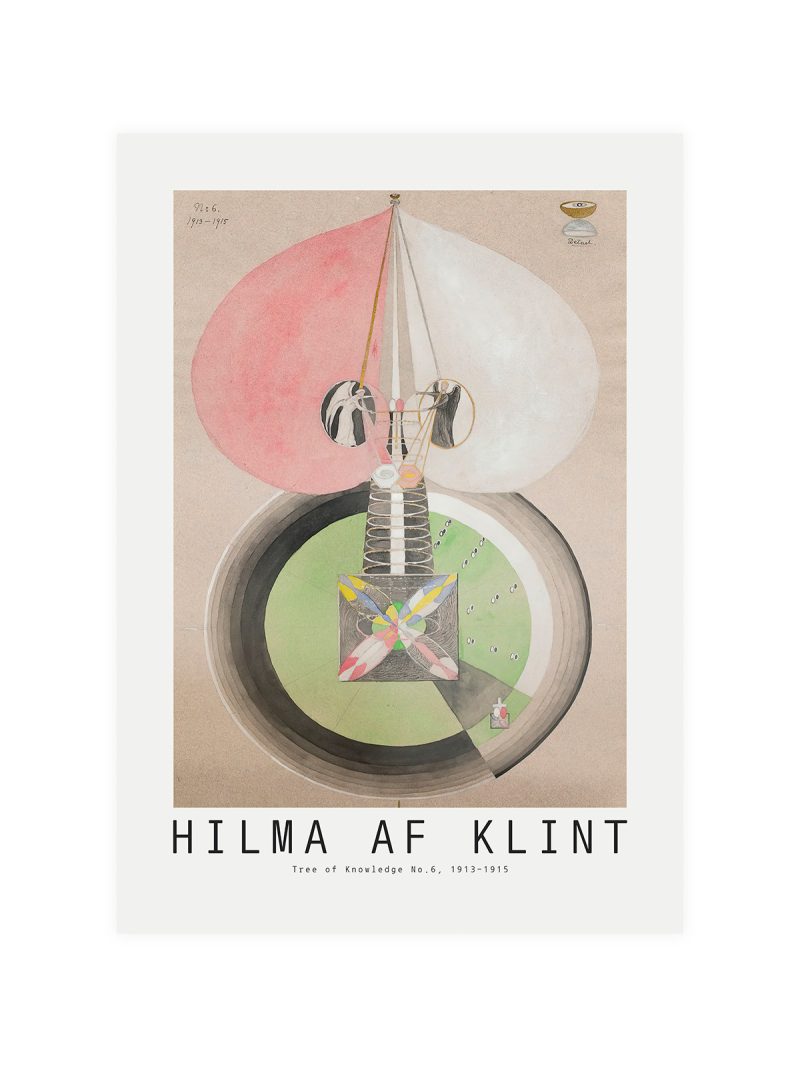
The series belongs to the temple project she worked on for years: paintings made for a spiral building she never got to build. The Tree of Knowledge is its most plant-like part — a trunk, a crown, round pods and small marked figures, drawn in a hand that sits between botany and diagram.
The differences between the sheets are the point: olive and ochre with pink and blue lobes, brown with gold, chalk-white with a rose, a narrow column on pale pink. Same structure, different weather.
What is in this collection
- Tree of Knowledge No. 1 — the green and ochre sheet.
- No. 2 — brown ground, gold and blue accents, the heaviest of the set.
- No. 5 — the most restrained arrangement of the motif.
- No. 6 — pale rose and white against chalk, built around a dark ring.
- No. 7b — the vertical state: a thin spine and a checkered column.
Each sheet carries her name and the series title in the white margin, and the pencil notes in the corner of every painting are part of the reproduction.
How to hang these
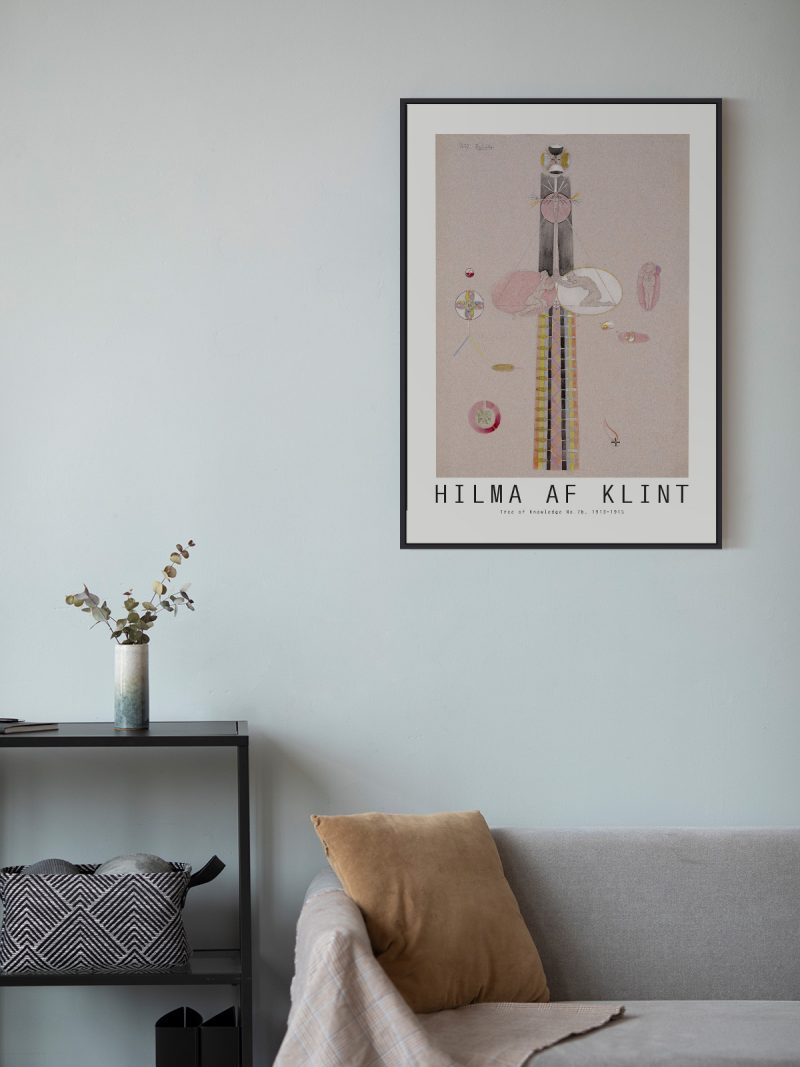
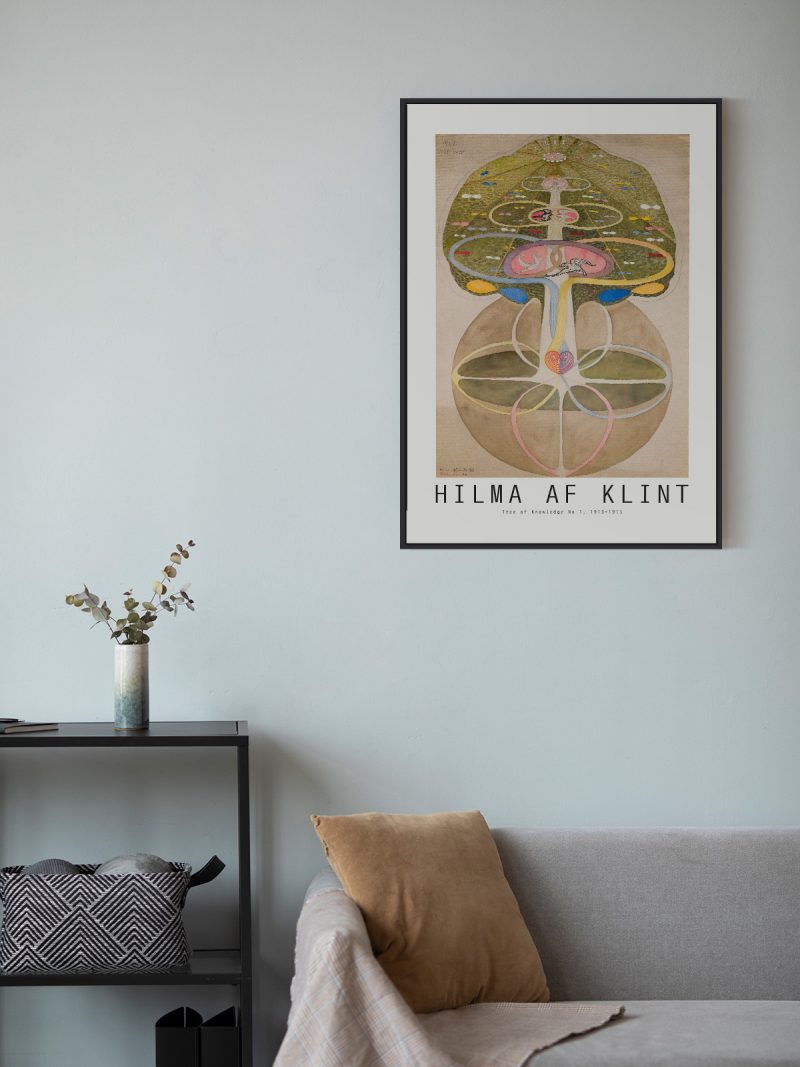
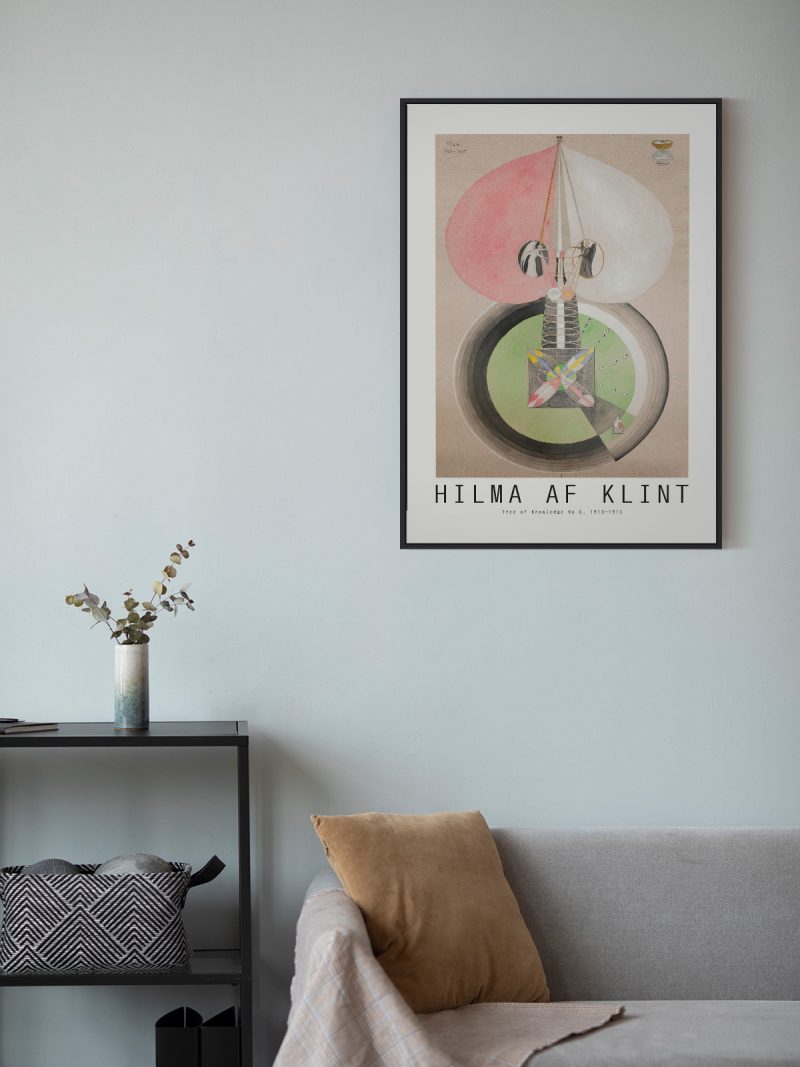
The palettes are muted, so they need a wall that is not fighting them: white or off-white, daylight, nothing bright nearby. One sheet is enough. If you take two, keep them from the same series and hang them with a wide gap — the compositions are symmetrical and read as a single column when they sit close.
A thin light-wood frame keeps the period feel; black makes the pencil notes look sharper. Avoid glass with heavy reflection — pale surfaces lose their detail behind it.
For other artists whose work runs on structure rather than subject, see Kandinsky and Klee; the wider northern selection is under Scandinavian.
Sizes, paper and delivery
Pigment print on 210 gsm Hahnemühle paper, sizes from 30×40 to 70×100 cm plus A3 and A2. Frame not included. Orders leave within 24 hours and arrive in 3–5 working days inside the EU, tracked.