Details
The image
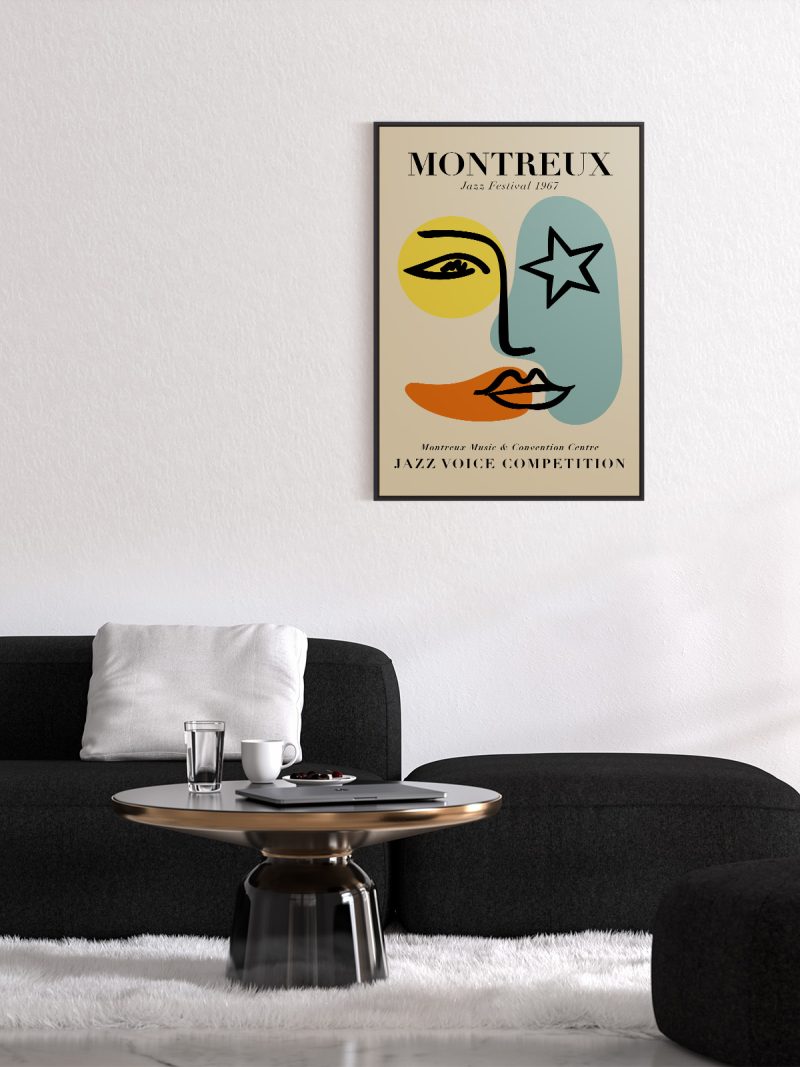
Two distinct graphic languages on one sheet: on one side, geometric forms held in strict relation; on the other, softer shapes that drift and float. Colour is applied in flat areas and the composition keeps the two halves in conversation rather than mixing them.
Where it comes from
Wassily Kandinsky and Paul Klee taught side by side at the Bauhaus and their friendship shaped the school’s thinking about colour and form: Kandinsky argued for the inner necessity of shapes, Klee for the line as a record of movement. Both died in the 1940s and their work has been in the public domain in Europe for a decade.
On the wall
It suits a study or a reading corner, where two languages on one sheet can be looked at properly. Because the composition is balanced, it holds a wall without needing company and it tolerates both dark and light interiors. At a large size the contrast between the halves becomes the subject.
In company
Pairs well with other Bauhaus prints and with plain furniture and it can sit at the centre of a group. Avoid hanging it beside very colourful work, the relationship between the two halves needs calm around it. A thin frame keeps the composition tight. If the wall is to hold another sheet, the rest of the Paul Klee collection follows the same rules.