Details
The image
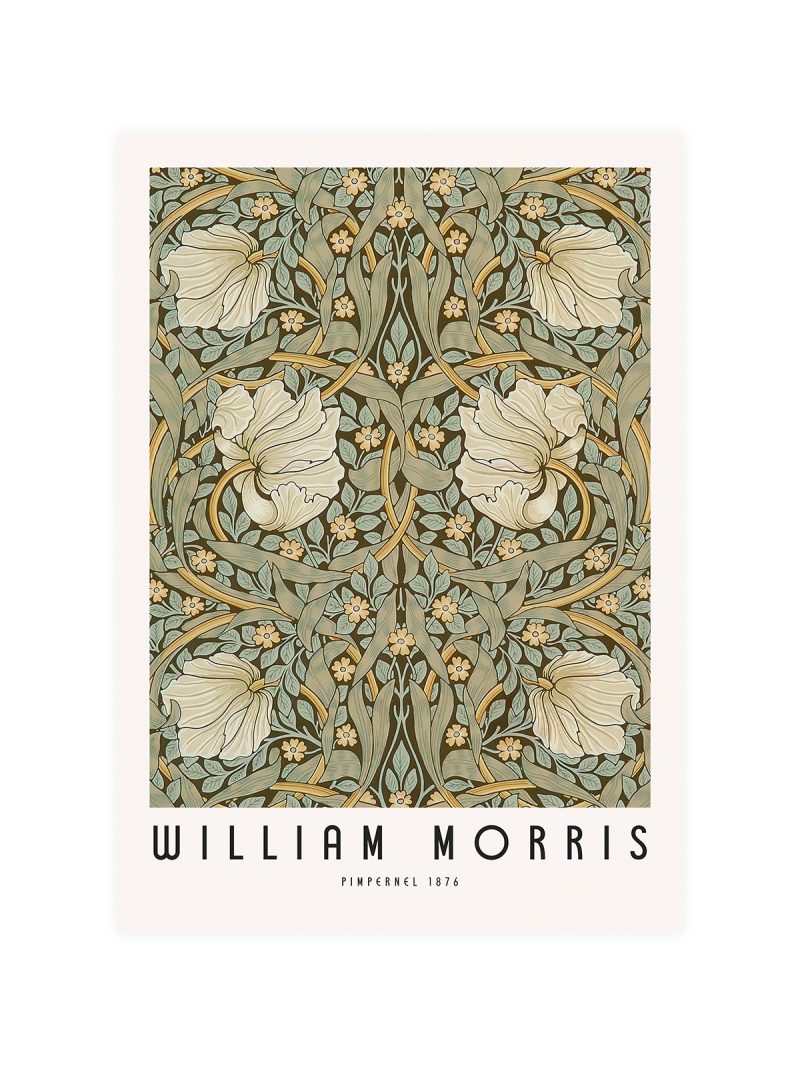
A pattern of blackthorn branches carrying small blossom and dark berries, drawn so that stems curve and cross without ever meeting at a centre. The colour is held to a few flat tones and the design repeats in both directions, so it can continue past the edge of the sheet.
Where it comes from
Blackthorn is one of the repeating patterns designed by William Morris, who argued that decoration should be made by hand and understood by everyone and who worked from plant studies rather than from ornament books. He avoided perspective and shading on purpose: a repeating surface, he believed, should be read as a surface rather than as a window onto a scene. The argument shaped the Arts and Crafts movement and, through it, a century of printed pattern.
On the wall
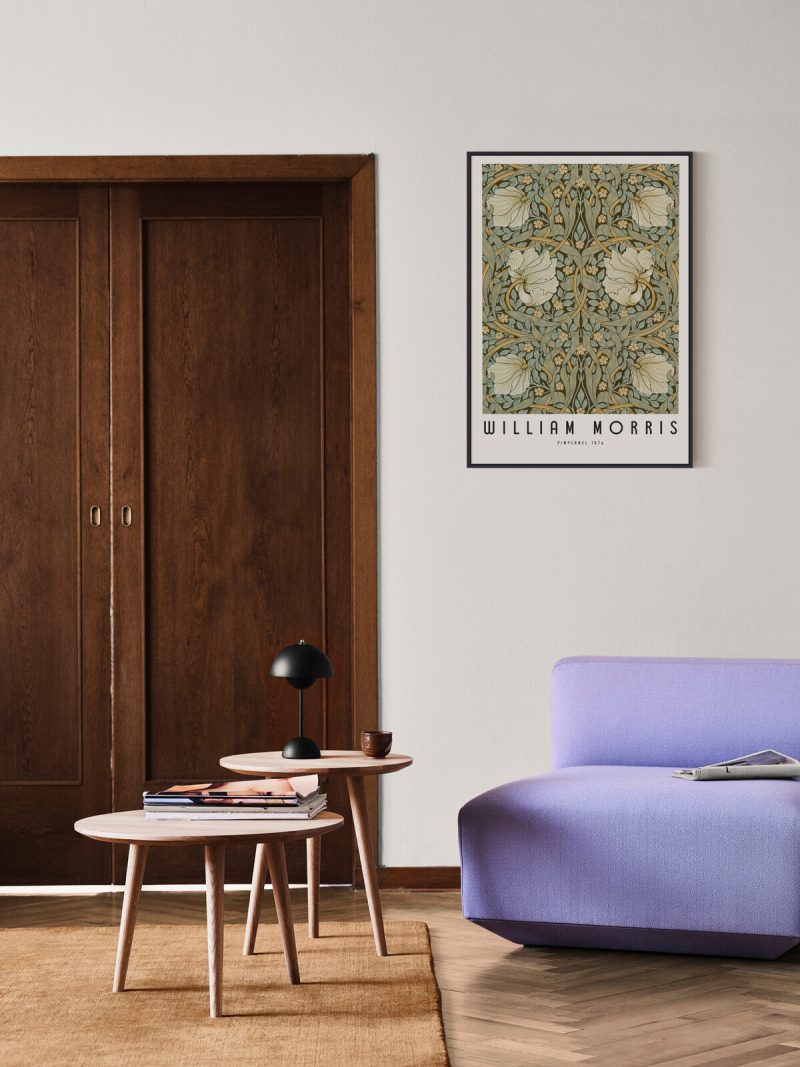
It works where a wall needs density rather than a subject: a reading corner, a hallway, a bedroom with plain furniture. Because the pattern has no centre, it suits narrow walls and awkward spaces. In a group it should be the piece that fills a gap without demanding attention.
In company
If the wall is to hold another sheet, the rest of the William Morris collection follows the same rules.Avoid hanging it next to a strong figurative image, the repetition would read as background rather than as the subject.