Details
The image
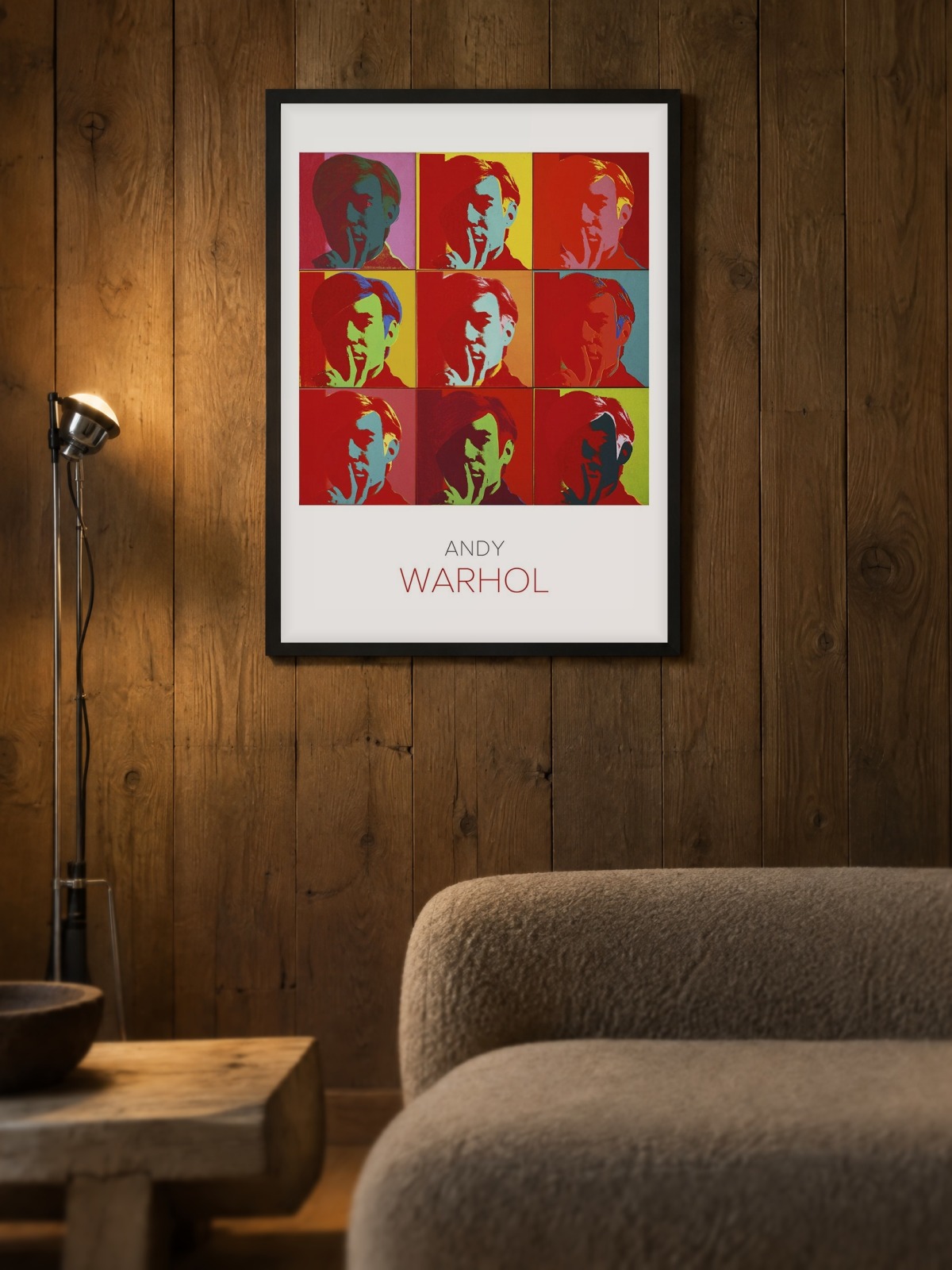
The same face repeated across a grid, each panel identical in drawing and different in colour, so the sheet reads as pattern at a distance and as a portrait up close. The features are reduced to flat areas, and nothing is modelled beyond what printing needs.
Where it comes from
The method came out of the screen-printing workshops of the 1960s: one photograph, one set of stencils, an unlimited number of colour combinations. That procedure was the argument, because it took a face and treated it as a product, and it took a product and treated it as a portrait. The habit of repetition, once it entered graphic design, became the standard way of making an image feel both mechanical and insistent.
On the wall
It needs distance to work: hung small it reads as decoration, hung large it becomes a wall of its own. It suits a studio, a hallway or a living room with plain furniture, where repetition can be seen as a decision. In a group it should be the piece that sets the rhythm.
In company
The Iconic collection gathers prints made for the same kind of wall.Avoid hanging it beside another repeated image, where the two grids would cancel each other out.