Details
The image
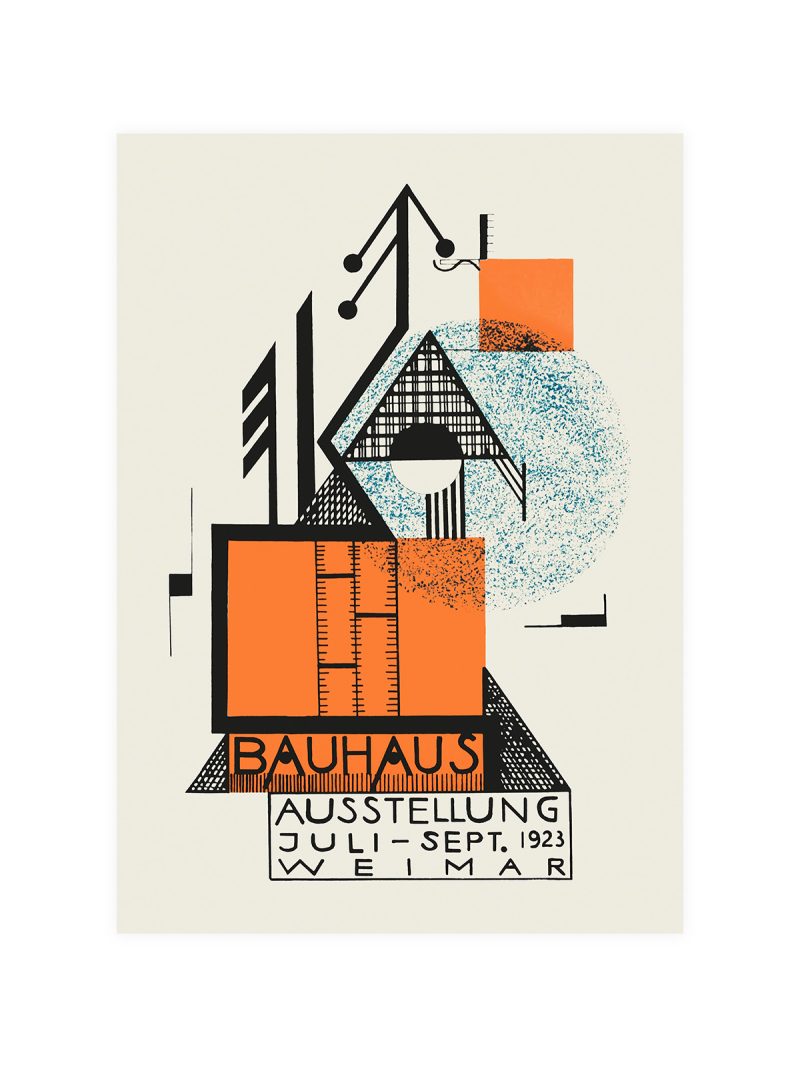
A street corner taken apart into diagrams: buildings as flat blocks, a kiosk as a silhouette, shadows as single shapes of one tone. More than half the sheet is empty paper, and that emptiness is what holds the composition together.
Where it comes from
The habit behind this picture is that of a painter who drew his way around a city the way a letter describes a room, by the things that caught the eye rather than by what happened to be there. Signs, awnings, lettering and street furniture were treated as material, flattened and reassembled until the page carried the rhythm of a walk. That approach made commercial graphics and painting share one vocabulary, and it is the reason this kind of work is studied by designers as much as by art historians.
On the wall
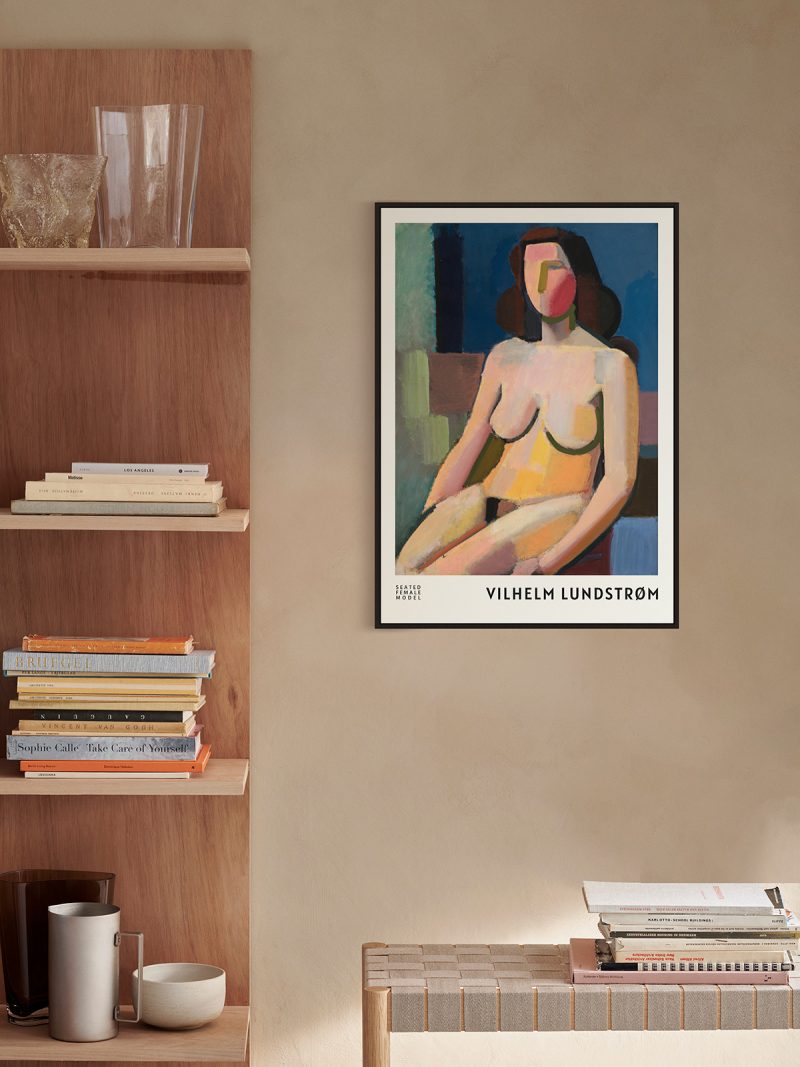
It suits a study, a hallway or a living room with modern furniture, where a spare composition gives the wall structure. Because so much of the sheet is empty, it needs a plain wall and daylight rather than a dark corner. In a group it should be the piece that sets the spacing.
In company
If you want company for it, the Geometric collection is where to look.Avoid hanging it beside busy illustration, where the empty paper would stop reading as a decision.