Details
The image
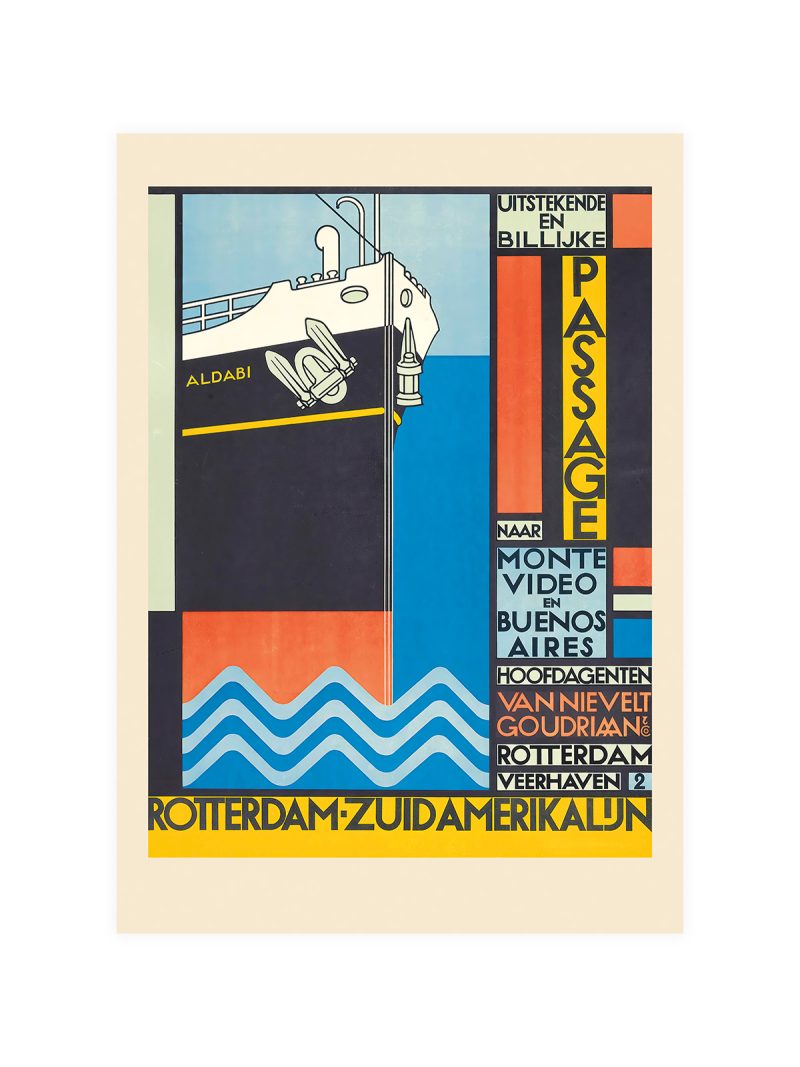
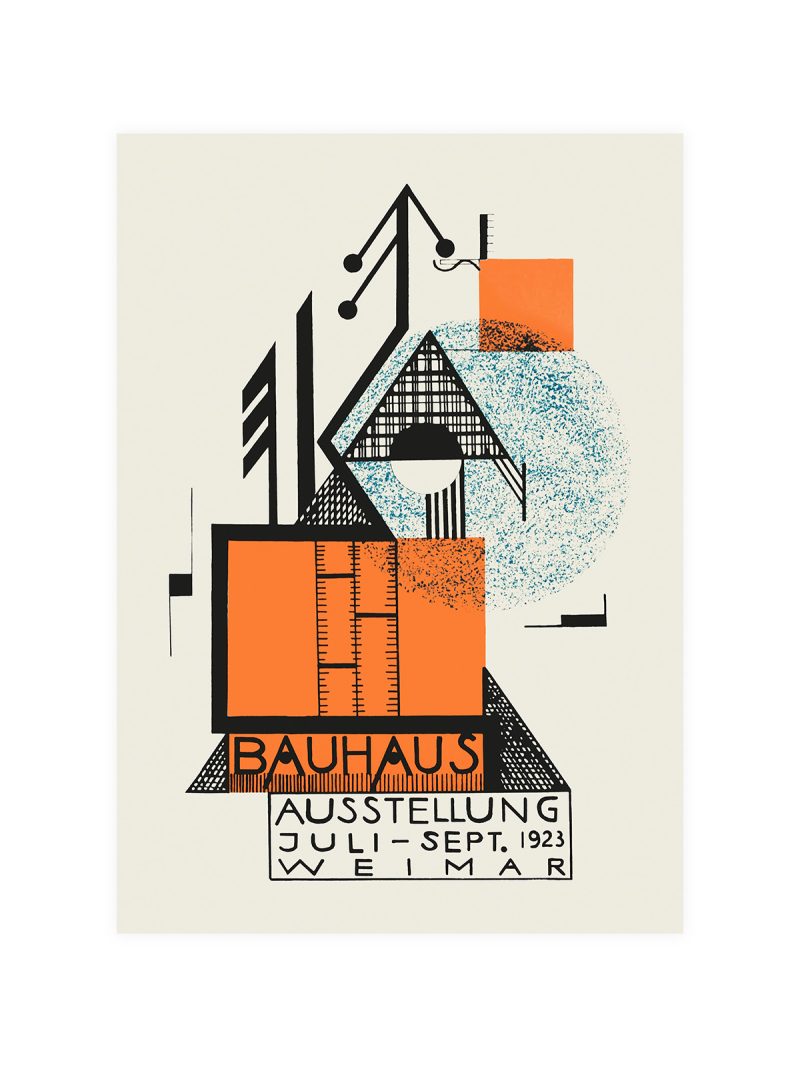
A stylised head built from circles, bars and lettering, set on a diagonal that pushes across the sheet. Nothing is decorative: each element carries information, from the date to the name of the school. The palette is limited and the contrast hard, so the poster reads at a distance.
Where it comes from
The Bauhaus held its first public exhibition in Weimar in the summer of 1923, part showcase, part argument for continued funding. Joost Schmidt, still a student at the time, drew the poster and borrowed the head from an emblem by Oskar Schlemmer, setting it into a lattice of geometric forms. It became one of the most reproduced graphics of the period.
On the wall
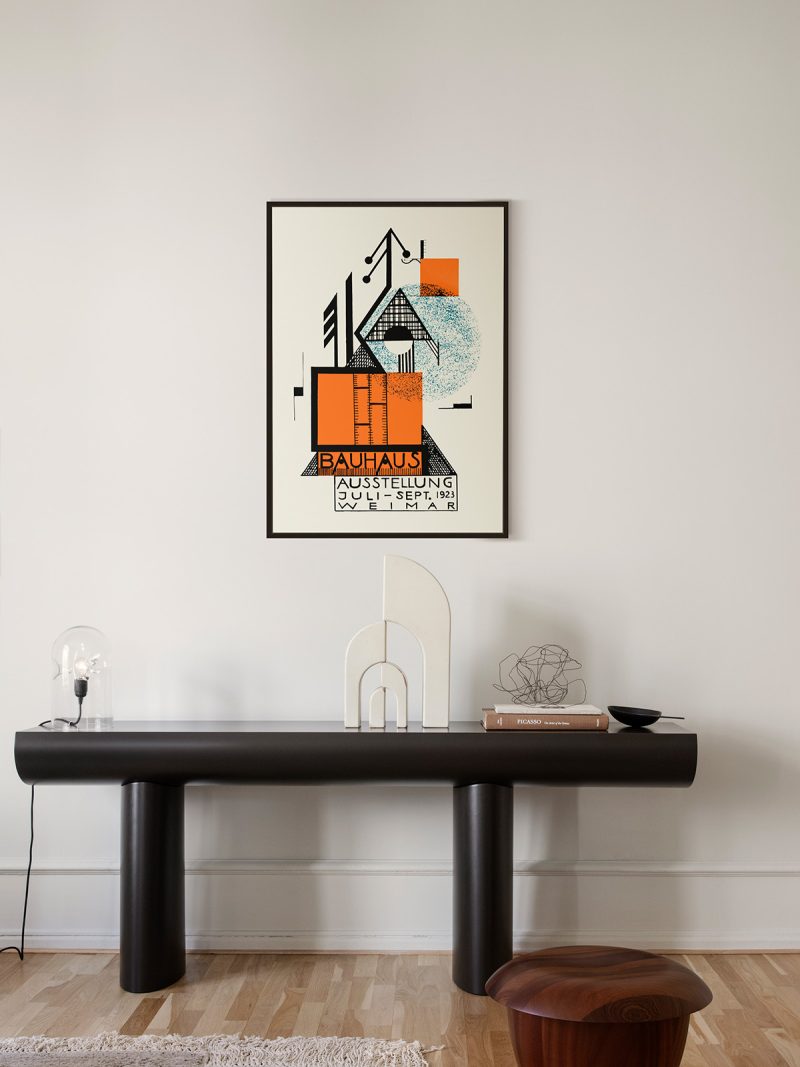
It wants somewhere with a bit of length: a study, a stairwell, a hallway where a diagonal can land. Because the composition is dense, it holds its own next to bookshelves and dark furniture. In a living room it works as the one piece that explains the rest of the wall rather than competing with it.
In company
Pairs well with architectural photography and with anything geometric but it should not be crowded. In a group it works as the piece that sets the rules, the others can be softer. A thin black frame keeps the lettering sharp; a wide one would swallow the delicate bars at the edges. What holds the Bauhaus collection together is the grid, and this sheet keeps to it.