Details
The image
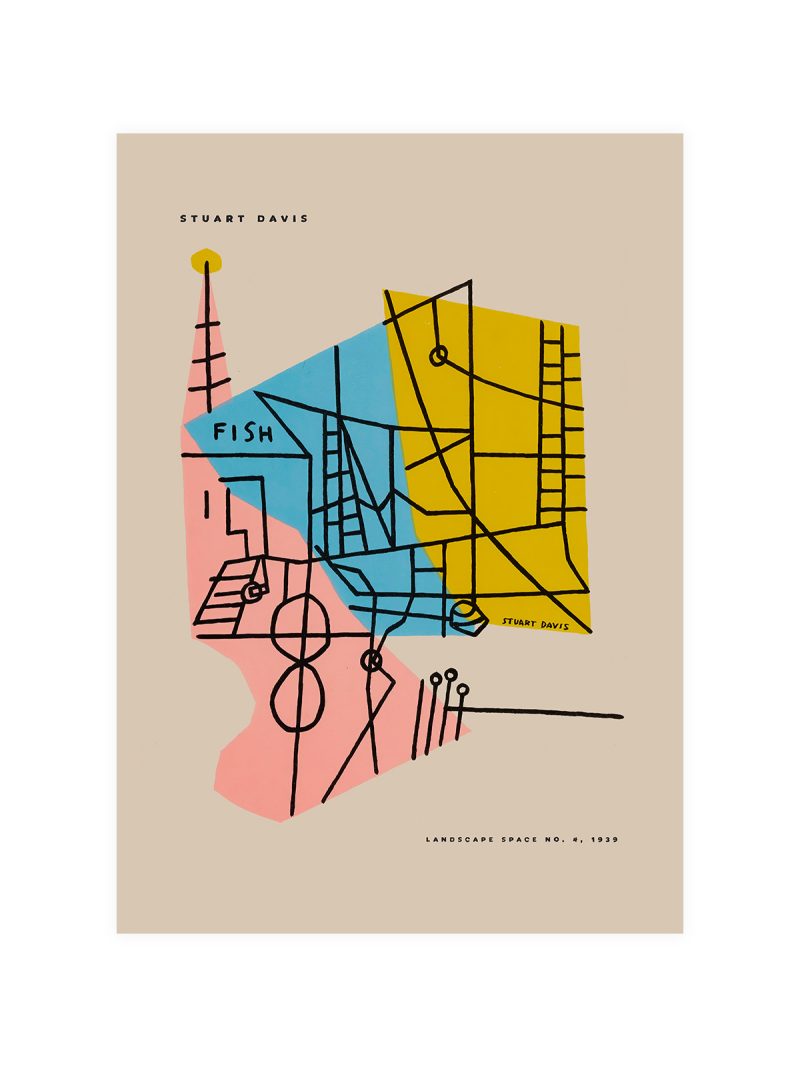
Industrial forms treated as a composition: cranes, masts and containers arranged in strong geometry, with lettering set as part of the structure rather than on top of it. The palette is limited and the perspective flattened, so the harbour reads as a pattern.
Where it comes from
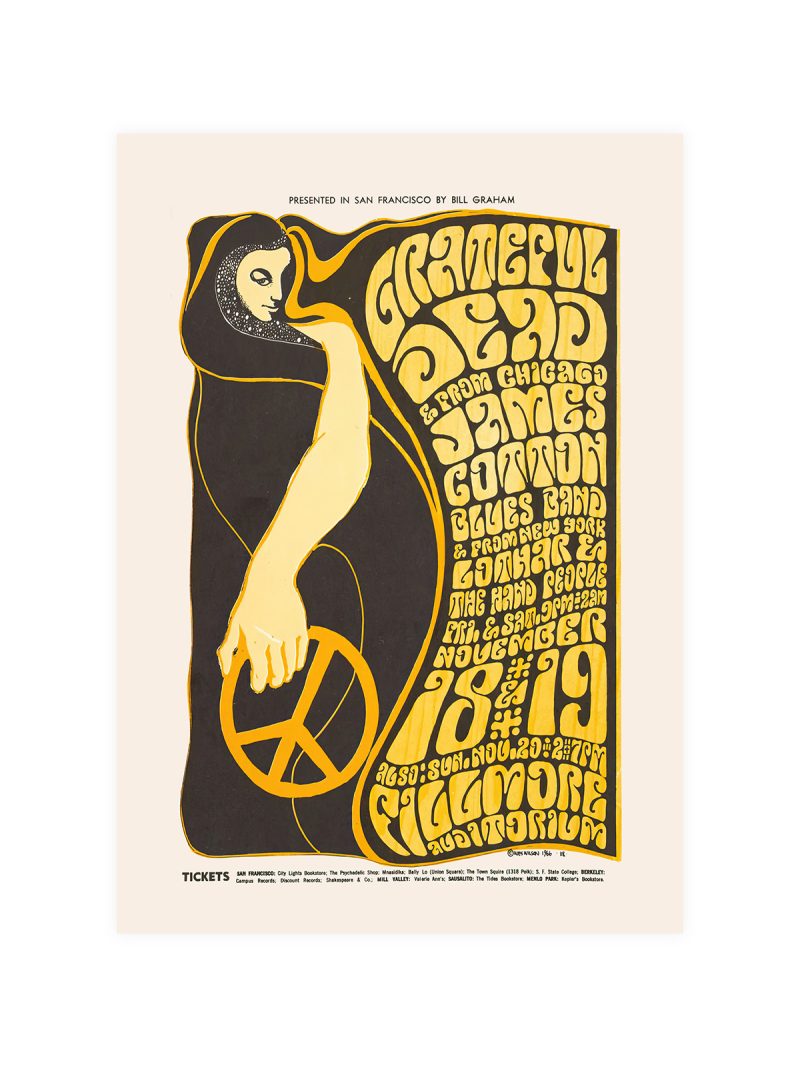
Polish poster design of the post-war decades had a habit of turning infrastructure into graphic art: ports, railways and factories were commissioned subjects and designers answered with abstraction rather than reportage. The result was a body of work that treated industry as a visual language, not as a news item.
On the wall
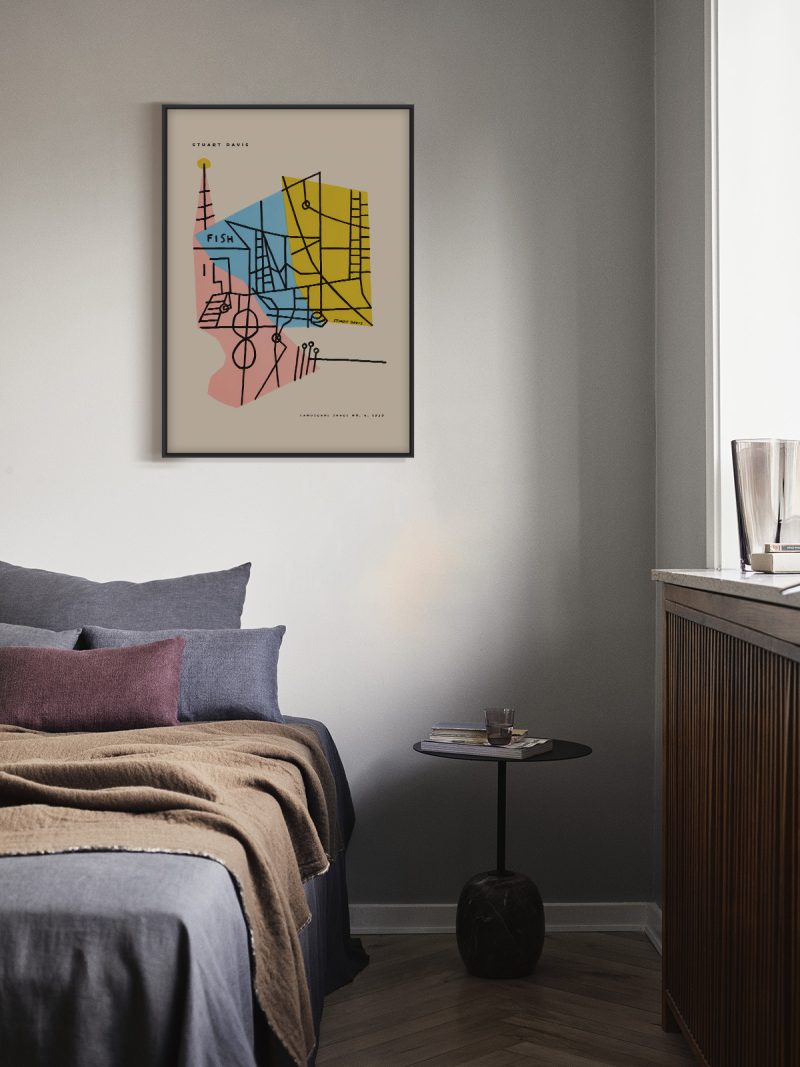
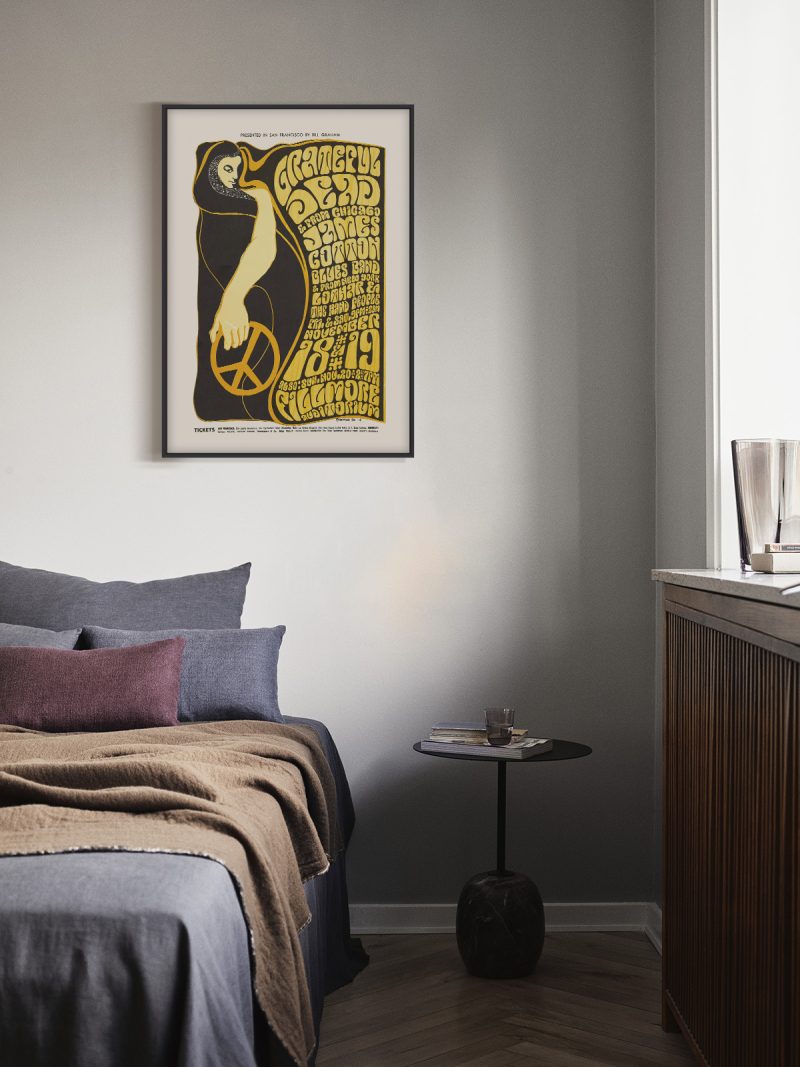
It suits a study, a hallway or a loft with industrial furniture, where heavy forms and flat colour belong. Because the composition is dense and angular, it needs a plain wall. In a large room it works as the structural element of a group and it holds up particularly well in a space that already contains metal, a shelving unit, a lamp, a frame, because the drawing repeats what the room is already doing.
In company
Pairs well with photography of architecture and with metal and it can anchor a group. Avoid delicate furniture nearby, the graphic is heavier than it looks. A thin black frame keeps the geometry tight. If the wall is to hold another sheet, the rest of the Uwaga Inwazja collection follows the same rules.