Details
The image
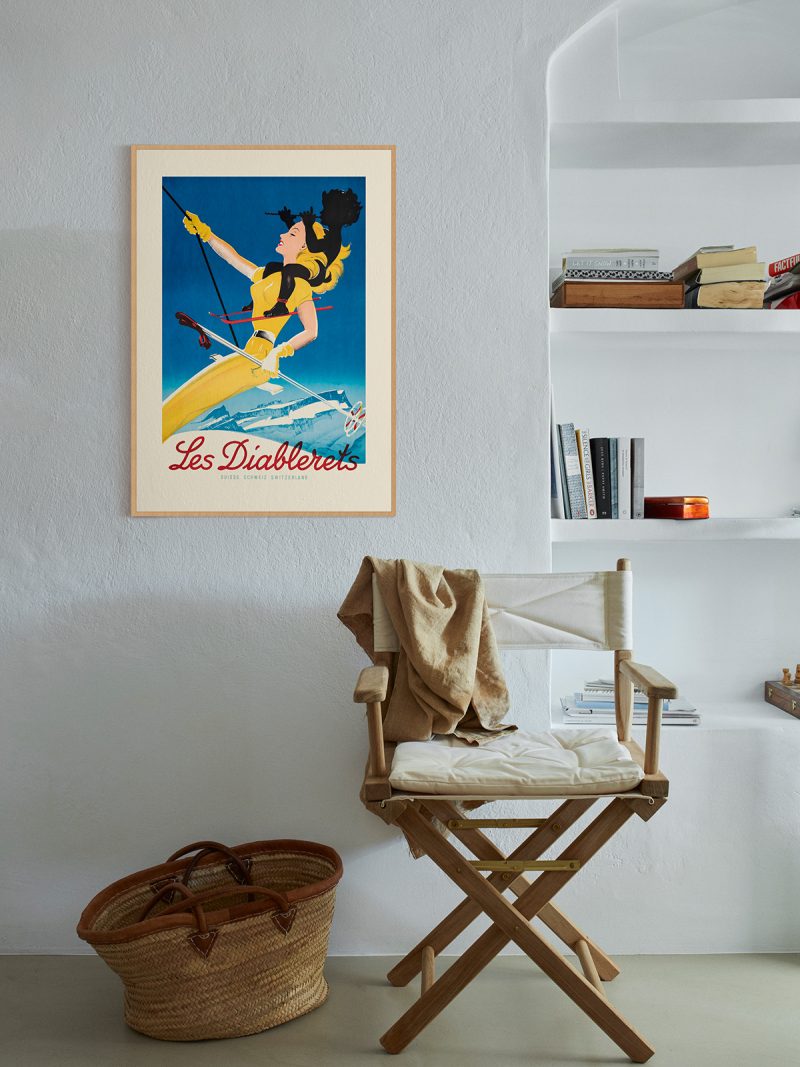
A late Matisse cut-out fills the sheet: flat colour, paper shapes, no shading and no perspective. The figure is built from a few large forms that overlap and lock together, so the eye reads rhythm before it reads a subject. Reproduced at poster scale, the colours stay solid rather than dissolving into detail.
Where it comes from
By the end of his life Matisse could no longer paint standing at an easel, so he cut shapes from painted paper and arranged them on the wall of his studio. What began as a practical solution became a body of work in its own right and museums built exhibitions around it. A retrospective poster celebrates that late period rather than the paintings most people know.
On the wall
It needs a wall with light around it: the shapes are large and flat and they get heavy in a dark corner. In a living room it works above a low sofa, where the eye meets it at a comfortable angle. In a hallway it reads from several metres, which is how these cut-outs were meant to be seen.
In company
Pairs well with pale wood, linen and other flat-colour prints and it does not need company at all. In a group it should be the largest piece, because its shapes lose definition when reduced. A thin light frame keeps the paper feeling; a heavy dark one would turn it into a museum plate. What holds the Matisse collection together is the grid, and this sheet keeps to it.