Details
The image
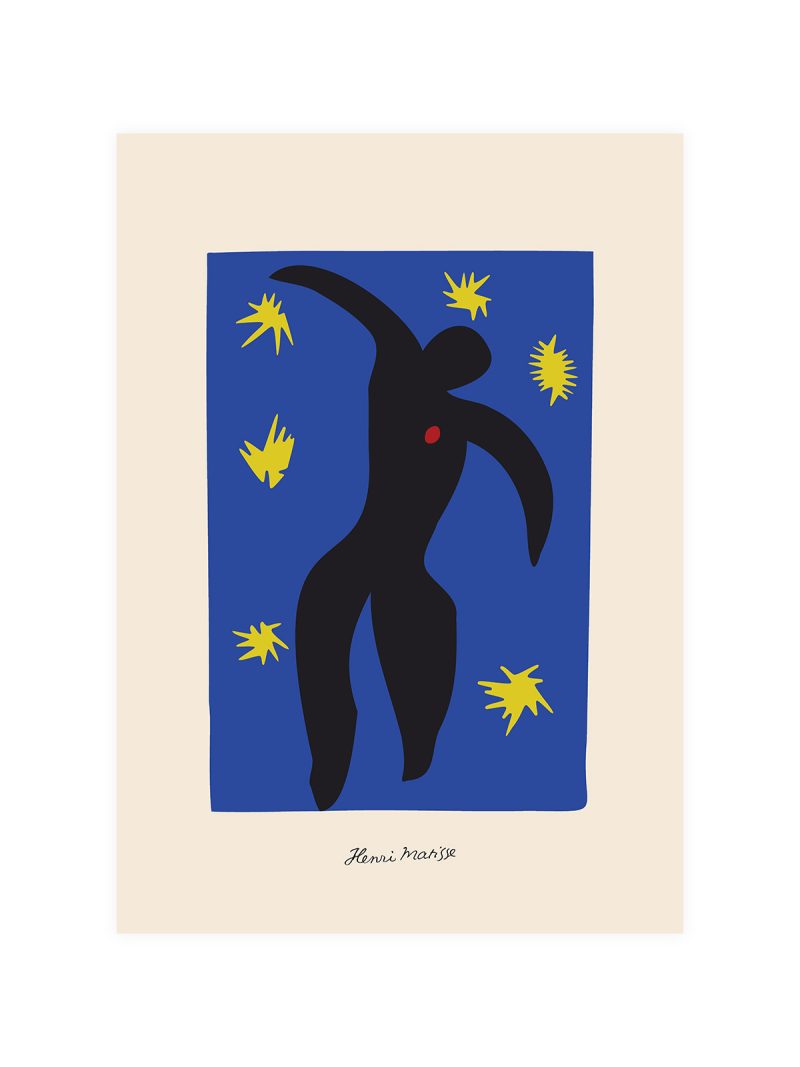
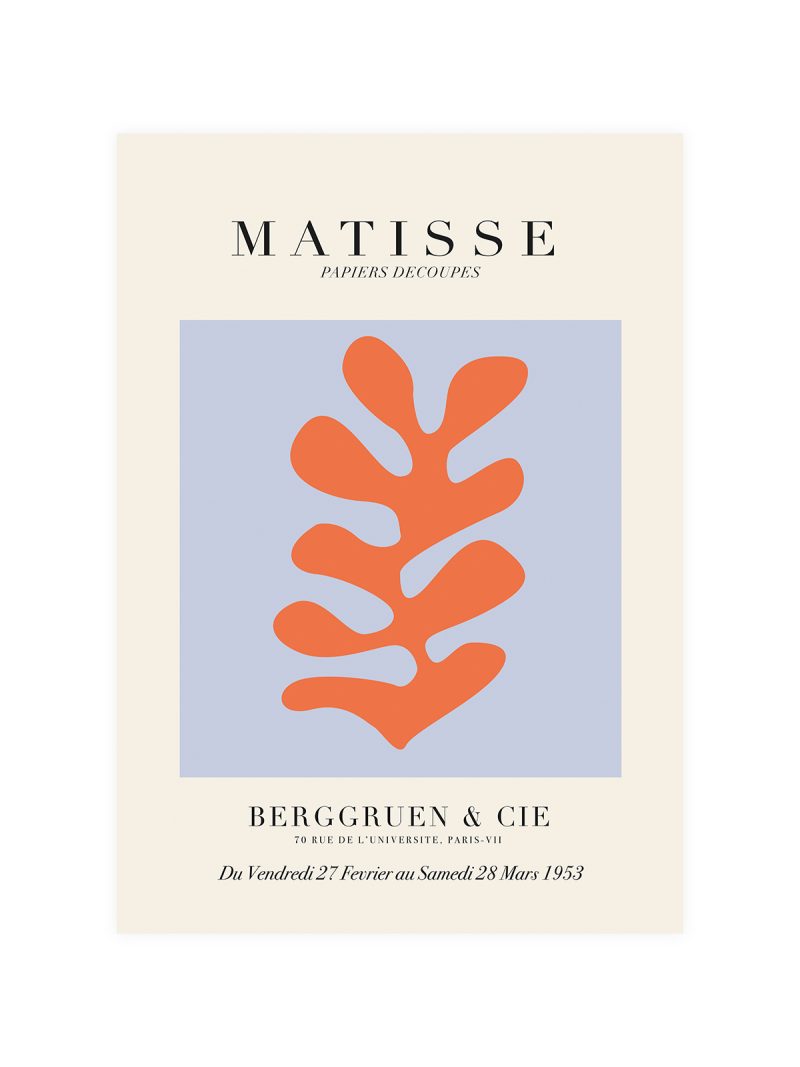
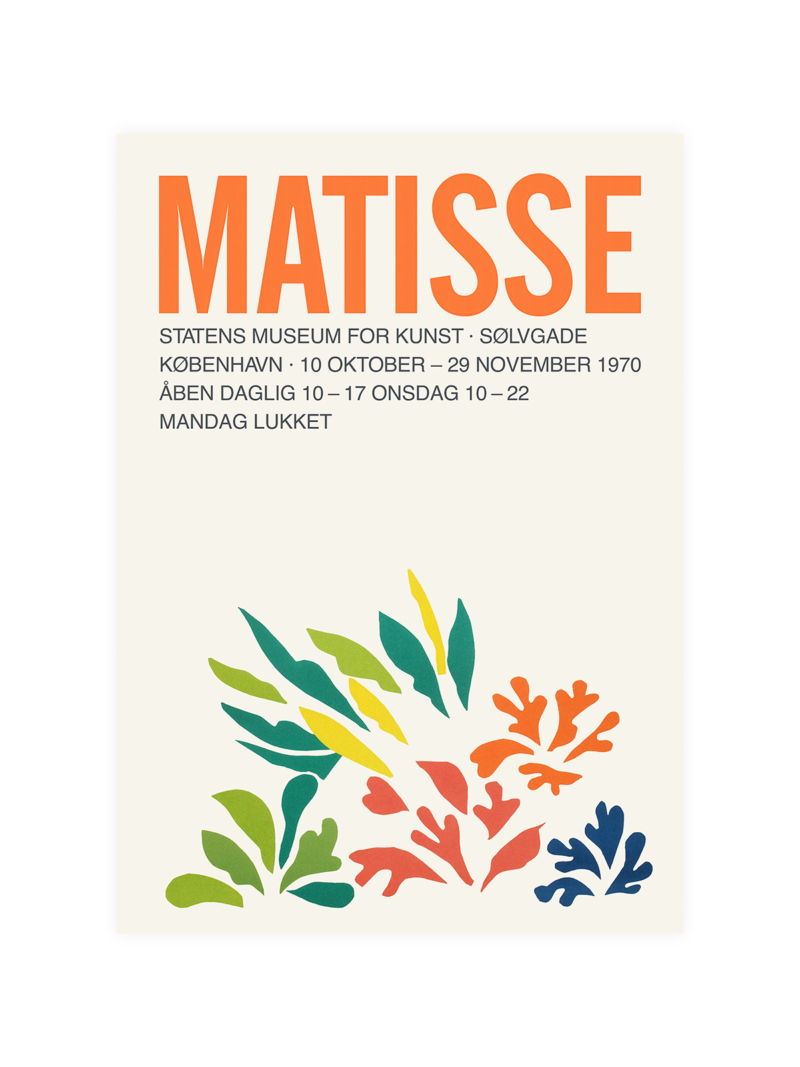
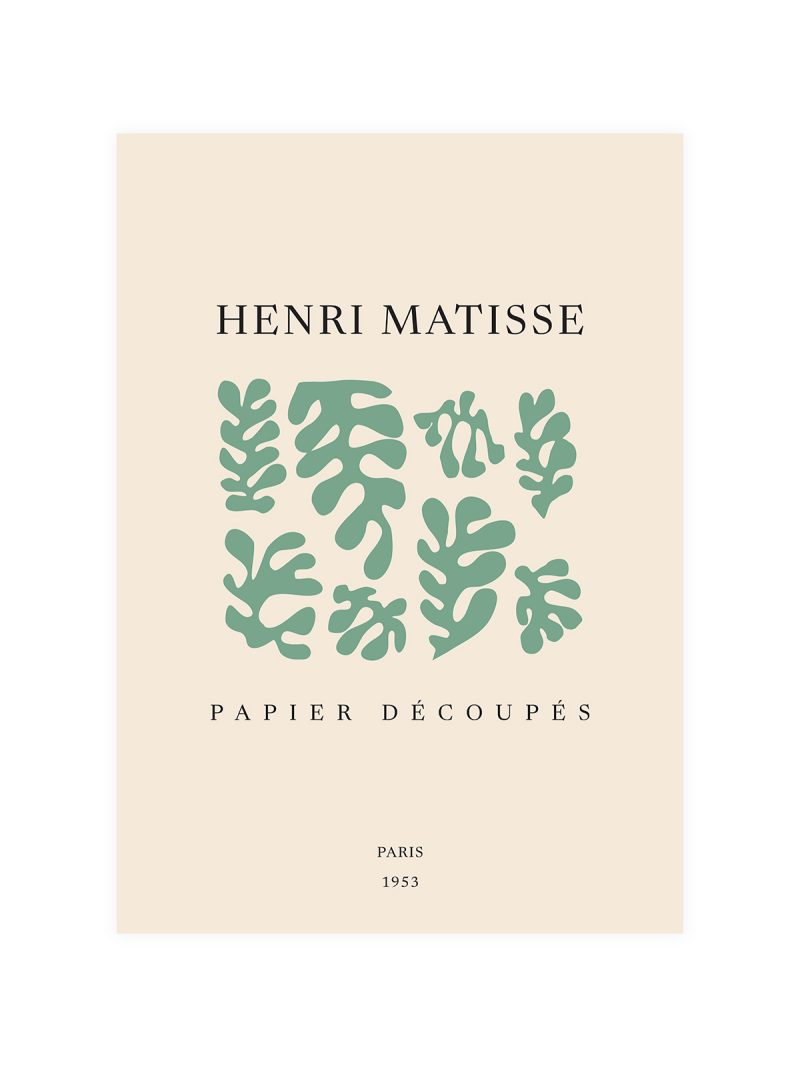
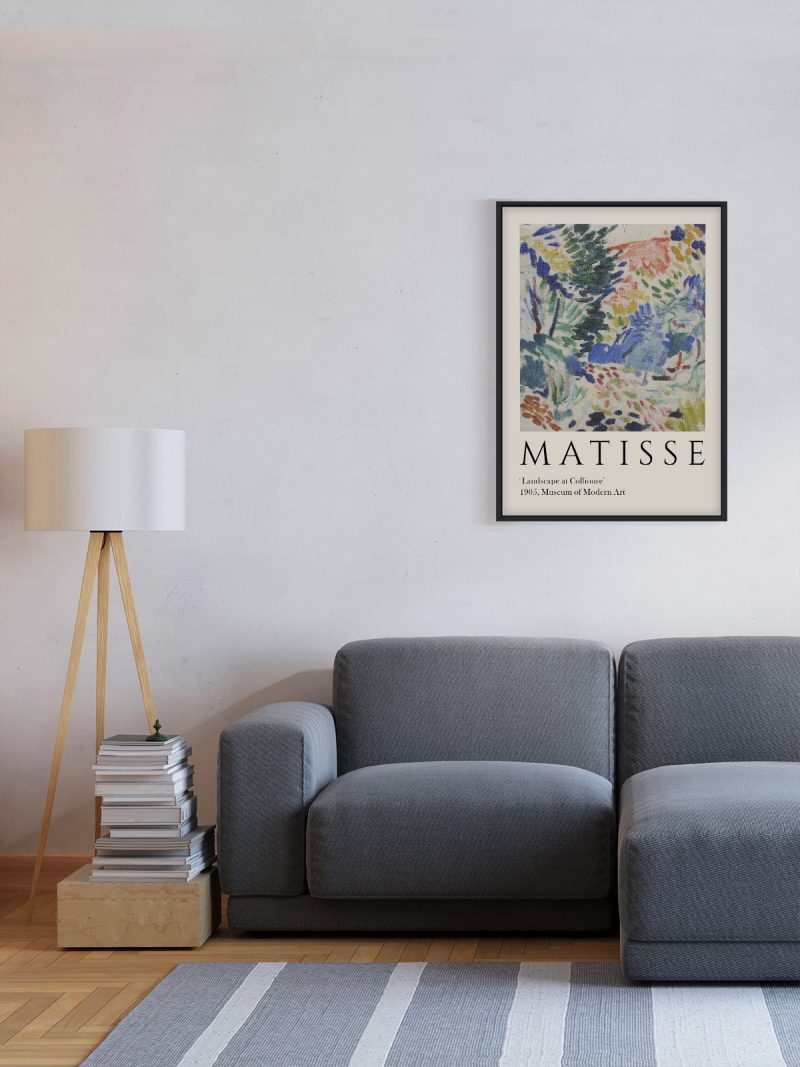
Shapes pinned flat against a ground: a leaf, a spiral, a jagged form that could be a plant or a body, each one a single colour with no shading at all. The pieces overlap slightly, so the composition reads as something arranged on a table and then fixed in place.
Where it comes from
Cutting coloured paper gave Matisse a way of drawing with scissors when painting had become physically difficult: the sheet was painted first, then cut, then moved until the arrangement worked. The method changed what a line could be, an edge made by a blade rather than a brush and it shaped how graphic designers thought about collage for the rest of the century.
On the wall
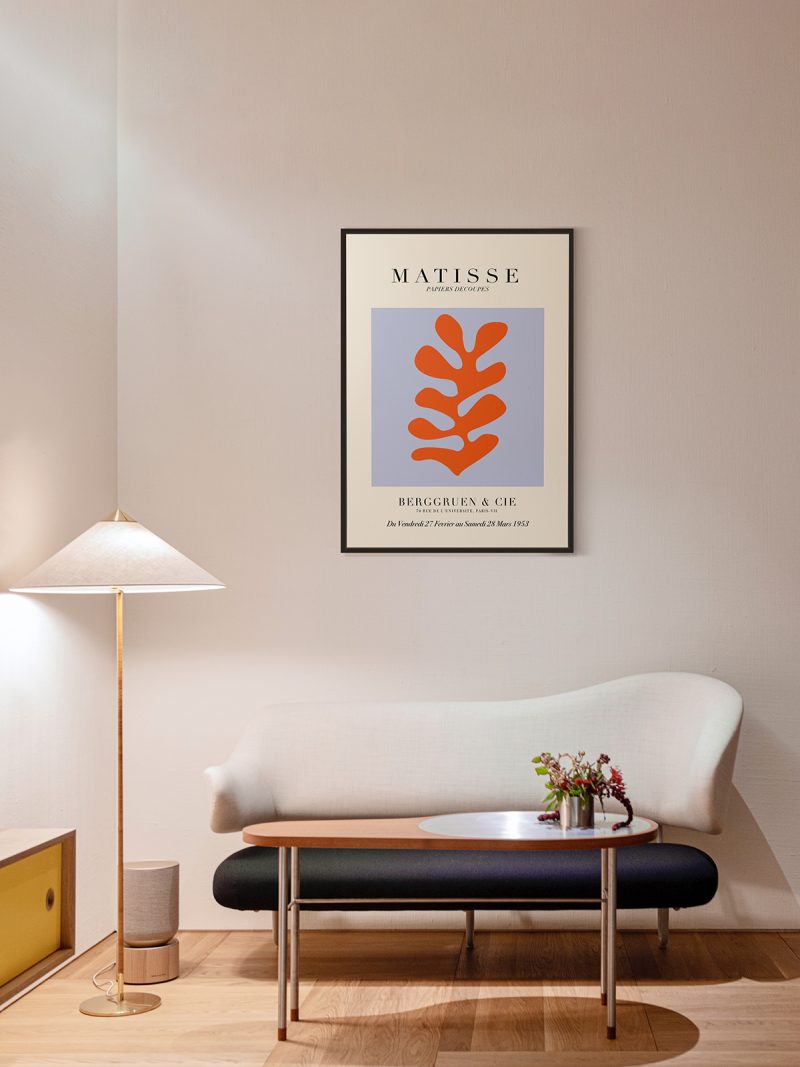
It brings movement and colour into a room without adding detail, so it suits a living room, a child’s room or a hallway with pale walls. Because the shapes are large and the palette is limited, it holds a big wall without crowding it. In a group it should be the piece that introduces colour.
In company
For a wall that will carry more than one, the Matisse collection supplies the rest.Avoid hanging it beside dense illustration, the cut edge needs empty space to be seen as a line.