Details
The image
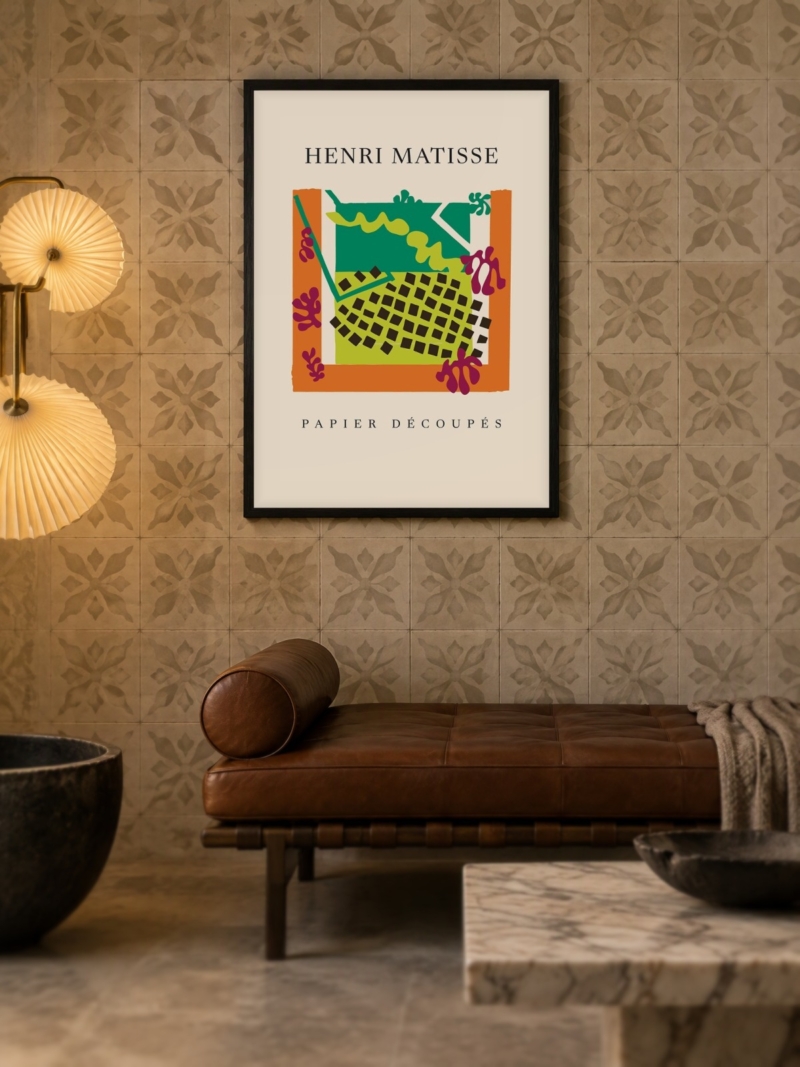
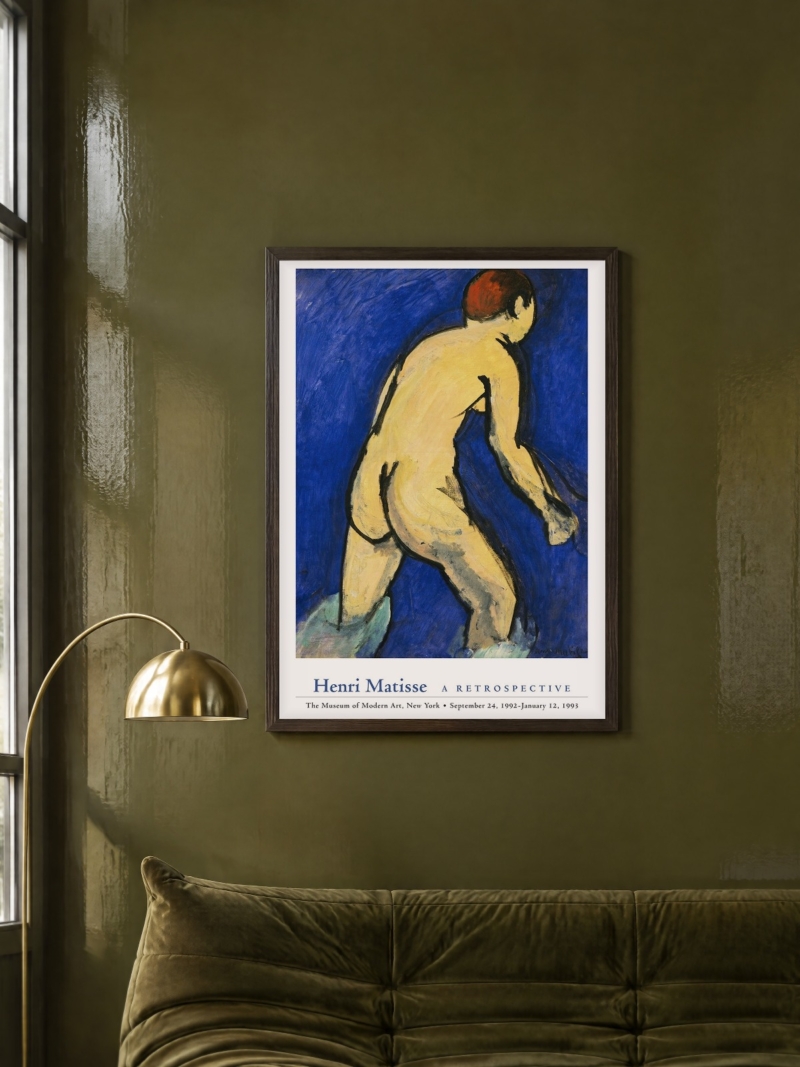
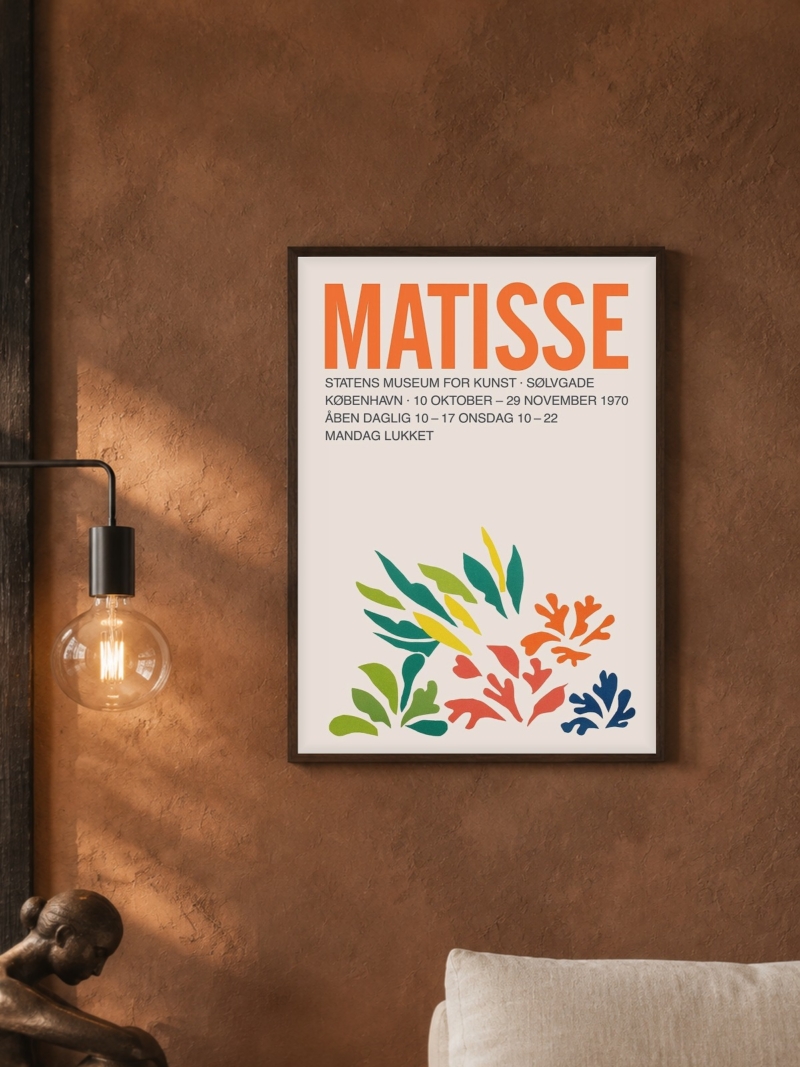
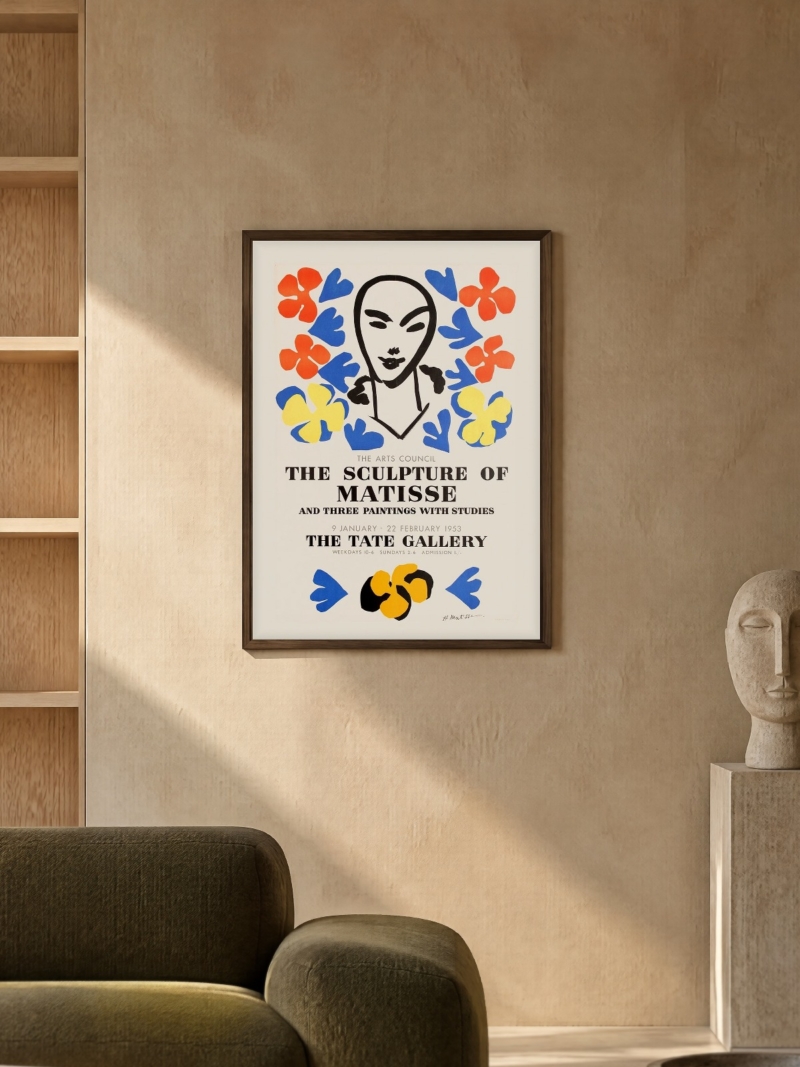
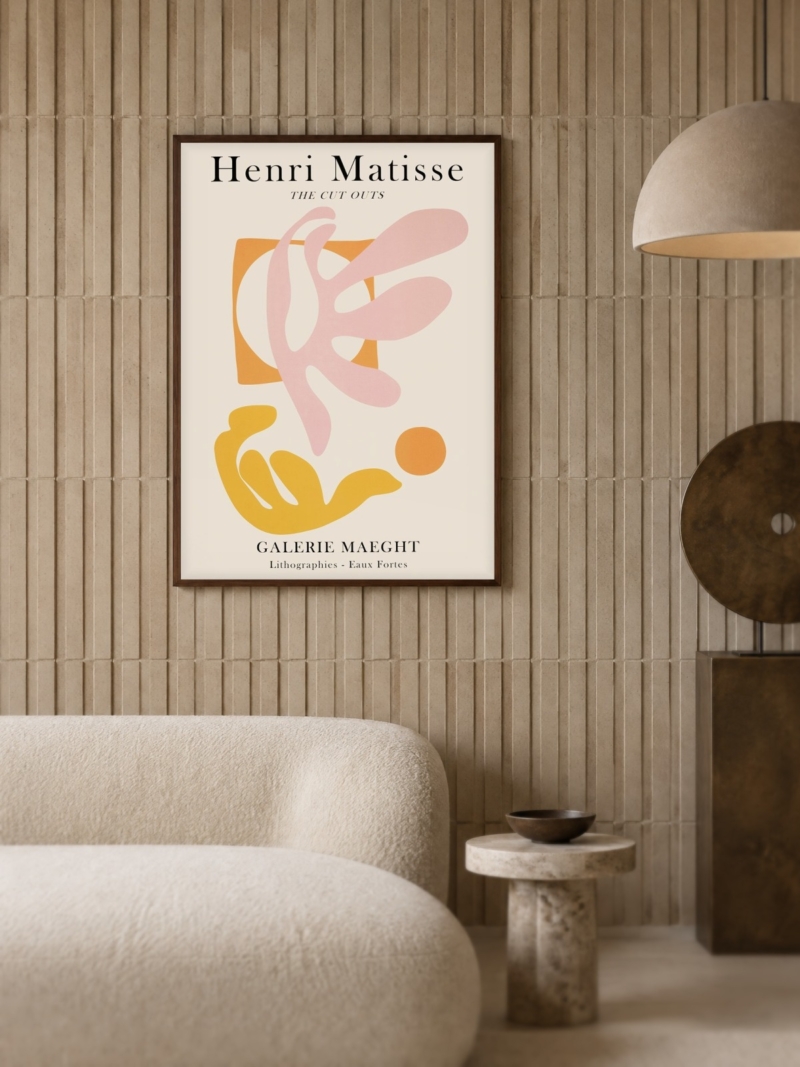
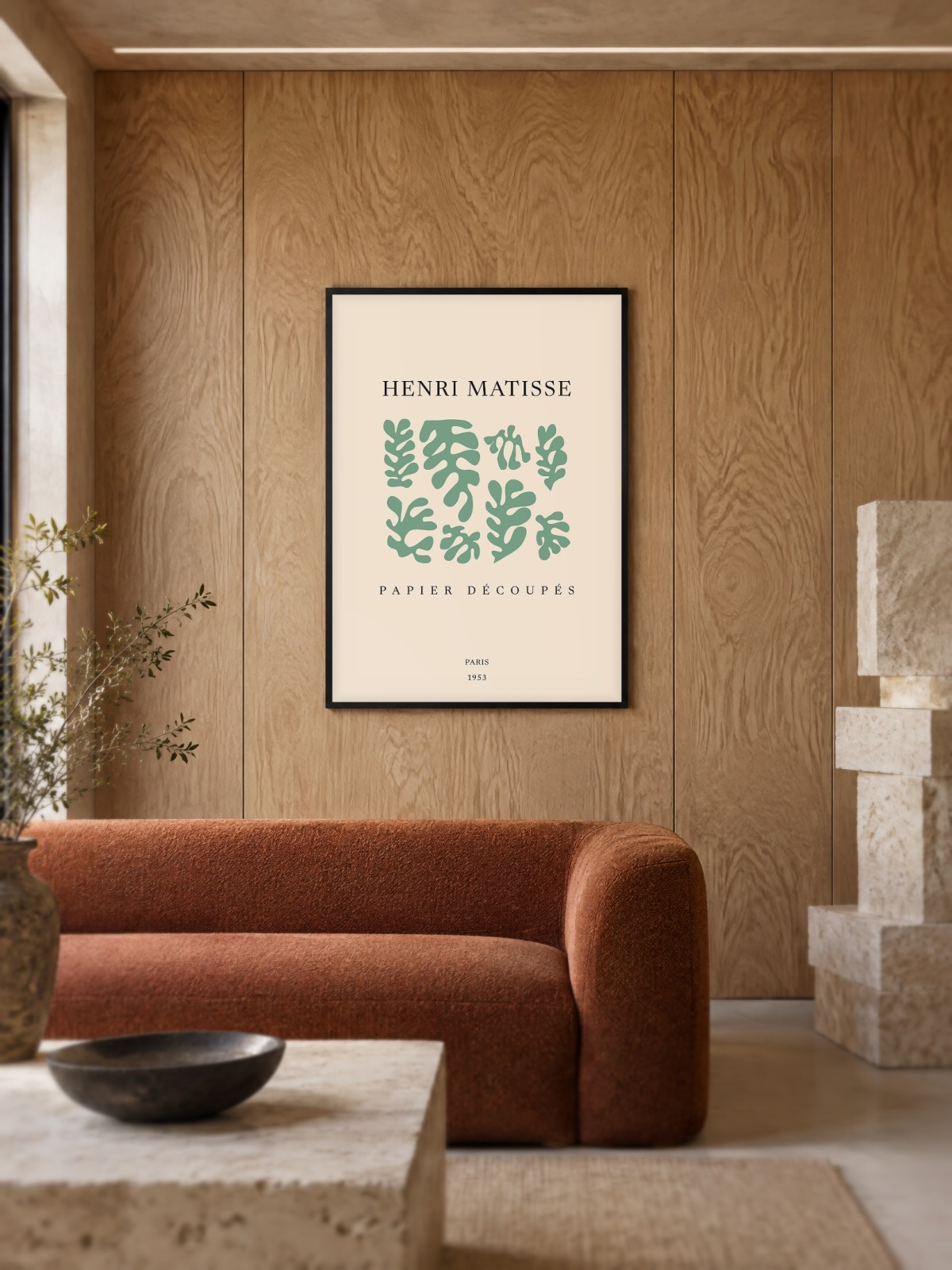
Large cut forms spread across a pale ground, some open like leaves, some solid like stones, with lettering set small at the base. The shapes do not overlap much, so the sheet reads as a scattered arrangement rather than as a composition with a centre.
Where it comes from
The cut-out method belonged to the last phase of Matisse’s working life: sheets painted in flat gouache, then cut, then moved around until the arrangement held. It was a way of drawing without drawing, the scissors made the line and it changed what graphic designers thought could be printed, because every element was already a block of ready colour.
On the wall
It brings colour and lightness into a room, so it suits a living room, a bedroom or a hallway with pale walls. Because the forms are open and the ground is generous, it holds a large wall without crowding it. In a group it should be the element that introduces colour.
In company
A second sheet from the Matisse collection will sit beside it without argument.Avoid hanging it beside dense pattern, the cut edge needs empty space to be seen as a line rather than as a boundary.